8 Oct 2026
Can I Ship to Russia, Iran, Cuba or North Korea from Shopify? Restricted Countries Explained
Which countries and regions Shopify blocks, how US, EU and UK embargoes differ, what changed for Syria, why Russia is restricted but not blocked, and how to handle restricted destinations in your store.
Last reviewed: 8 October 2026. Country rules change often; check the official sources linked below before relying on any list. This is general information, not legal advice.
Quick answer
Shopify itself doesn't support Cuba, Iran, North Korea, Syria, and the Crimea, so-called Donetsk People's Republic and so-called Luhansk People's Republic regions of Ukraine. Shopify says it prohibits orders shipping to these places. These are the jurisdictions that US, EU and UK sanctions treat most severely, or did until recently.
Russia and Belarus are not on Shopify's list, so the platform will not stop the order for you. That doesn't make them unrestricted. EU, UK and US sanctions and export controls prohibit many goods from going there and prohibit dealing with listed parties. Whether a particular sale is legal depends on your jurisdiction, the product and the buyer.
The regions Shopify blocks
Shopify's help center page on unsupported countries and regions lists:
| Country or region | Note |
|---|---|
| Cuba | Comprehensive US embargo |
| Iran | Comprehensive US sanctions; extensive EU and UK measures |
| North Korea | Comprehensive US sanctions; UN Security Council measures |
| Syria | Still on Shopify's list; see the 2025 changes below |
| Crimea region of Ukraine | Region-wide US, EU and UK restrictions |
| So-called Donetsk People's Republic (DNR) | Region-wide US, EU and UK restrictions |
| So-called Luhansk People's Republic (LNR) | Region-wide US, EU and UK restrictions |
Shopify says the restrictions cover four things: creating a Shopify account from these places, accessing storefronts and accounts from them, products originating from them, and orders shipping to them. Stripe's restricted businesses list names the same seven jurisdictions.
A practical gap: a region block works on the address a customer enters. Crimea, Donetsk and Luhansk are parts of Ukraine, not separate countries in a checkout country picker. A buyer can type "Ukraine" with a Sevastopol or Simferopol city name, or misspell the region. OFAC's July 2020 settlement with Amazon described exactly this failure: screening that missed alternative spellings of sanctioned places. A city-level and spelling-tolerant check catches more than a country dropdown can.
What changed for Syria
Syria shows that "embargoed countries" lists go out of date.
- United States: an Executive Order of 30 June 2025 revoked the orders behind the Syria sanctions program with effect from 1 July 2025, and OFAC removed the Syrian Sanctions Regulations from the Code of Federal Regulations. The Caesar Act was repealed on 18 December 2025. Individual designations remain on the SDN List under other programs. OFAC's former Syria program page now points to the Promoting Accountability for Assad and Regional Stabilization Sanctions program.
- European Union: on 28 May 2025 the EU adopted legal acts lifting its economic sanctions on Syria, apart from measures tied to security and to the Assad regime. Listings of individuals and entities connected with the former regime were kept.
Shopify and Stripe still list Syria as unsupported, so a Shopify merchant can't ship there through the platform regardless. The broader lesson is that a static country list copied from a blog post, including this one, will eventually be wrong. Use a source that is maintained.
Russia and Belarus: restricted, not blocked
Russia is the most common reason merchants ask this question, and the answer is not a simple yes or no.
If you are an EU business. Council Regulation (EU) No 833/2014 bans the sale, supply, transfer or export of long lists of goods to any person in Russia or for use in Russia. Among them:
- Luxury goods (Article 3h, Annex XVIII) worth more than €300 per item unless the annex says otherwise. This covers many fashion items, leather goods, perfumes, watches, spirits, sports equipment, and audio and video equipment.
- Goods that could enhance Russia's industrial capacity (Article 3k, Annex XXIII), which reaches into everyday product categories.
- Dual-use and advanced technology items (Articles 2 and 2a), including the Common High Priority Items used in Russian weapons.
Belarus faces parallel measures under Council Regulation (EC) No 765/2006. On top of the goods bans, EU asset-freeze listings under Council Regulation (EU) No 269/2014 prohibit making funds or economic resources available to listed people. The EU adopted its 20th package on 23 April 2026 and its 21st on 23 July 2026. The annexes keep growing, so check the current consolidated text rather than a summary.
If you are a UK business. The Russia (Sanctions) (EU Exit) Regulations 2019 contain their own trade restrictions, including on luxury goods and many industrial and technology goods. OTSI enforces these trade sanctions with civil penalties.
If you are a US business. The US doesn't run a comprehensive embargo on Russia, but the Export Administration Regulations require a licence to export to Russia or Belarus for every item on the Commerce Control List, for luxury goods listed in Supplement No. 5 to Part 746, and for broad categories of other goods identified by tariff code in other supplements to Part 746. OFAC prohibits dealing with the very large number of Russia-related SDNs, and Executive Order 14071 bans certain services to Russia.
The result: a merchant selling low-value goods that fall outside every annex, to a buyer who is not listed, may be able to sell to Russia lawfully. A merchant selling a €450 handbag from Germany may not. A US merchant shipping any item that needs a licence may not. That is a product-by-product and party-by-party analysis.
"Embargoed" vs "high-risk": different questions
Merchants often mix up three kinds of country list:
- Embargoed or comprehensively sanctioned jurisdictions. Almost all trade is prohibited for persons subject to that regime, unless licensed.
- Countries with sectoral or list-based sanctions such as Russia, Belarus or Venezuela. Specific goods, sectors or parties are restricted.
- AML high-risk lists, such as FATF's "black" and "grey" lists and the EU's list of high-risk third countries. These are about money-laundering controls, not trade bans. They tell you to look more carefully, not that a sale is illegal.
A good country check tells you which category a destination falls into and why.
How to handle restricted destinations in your store
- Don't sell to unsupported regions in Shopify Markets and shipping zones. Shopify's own block is a backstop, not your only control.
- Decide your Russia and Belarus policy deliberately. Many merchants simply stop shipping there because the analysis is costly. If you continue, classify each product against the EU, UK or US lists that apply to you.
- Check billing and shipping countries separately. A billing address in one country and a shipping address in another is common, and either one can be the problem.
- Screen the people as well as the places. A listed person can live anywhere.
- Watch for diversion. Orders to forwarders in countries that border Russia, or to known transshipment hubs, deserve a closer look. See our guide on freight forwarder red flags.
- Record the reason whenever you allow or block an order on country grounds.
How MatchAudit checks destinations in Shopify
The MatchAudit Shopify app evaluates country risk on every screened order:
- It assesses the billing country and the shipping country separately, using the customer's default address only when an order has neither, and the strictest result decides.
- Country risk comes from a maintained MatchAudit service. Its inputs include territorial and sectoral sanctions, the FATF Call for Action and Increased Monitoring lists, the EU's AML high-risk countries, Transparency International's CPI, the World Bank's Rule of Law indicator and source freshness.
- A BLOCK result is shown as embargoed and a CAUTION result as restricted. Both place a hold on the order's open fulfillment orders and tag it
matchaudit-review-requiredfor a person to review. - You can add your own stricter rules in Settings. Embargoed and restricted rules hold fulfillment; watch records evidence only. A merchant rule can only tighten the shared result, never weaken it.
- If the country service is unavailable, the order is held for review, not treated as clear.
Alongside the country check, MatchAudit screens the billing, shipping, customer and company names against the sanctions lists you select, so a listed buyer in an unremarkable country is caught too.
See which of your past orders went where. Install MatchAudit and run the free check of your recent order history. Its report groups country-risk results separately from name matches, so you can see your destination exposure at a glance.
Frequently asked questions
Is it legal to sell to customers in Russia from my online store? It depends on where your business is, what you sell and who the buyer is. EU, UK and US rules prohibit many goods, including EU luxury goods above €300 per item, and prohibit dealing with listed parties. Low-risk goods to an unlisted buyer may be permitted, but you need to check the specific product and party.
Does Shopify block Russia? Russia isn't on Shopify's unsupported countries and regions list. Shopify won't stop a Russia order on that basis, so the decision is yours.
Can I ship to Ukraine? Yes, in general. The restrictions apply to Crimea and the so-called DNR and LNR regions, not to Ukraine as a whole. That's why city- and region-level checks matter.
Is Syria still embargoed? The US Syria sanctions program ended on 1 July 2025 and the EU lifted most economic sanctions in May 2025, but individual listings remain. Shopify and Stripe still list Syria as unsupported.
Related reading
- Do Shopify stores need sanctions screening?
- EU and UK sanctions rules for online shops
- Freight forwarders and reshipping: red flags
Official sources
- Shopify Help Center, Unsupported countries and regions: help.shopify.com
- Stripe, Restricted and prohibited businesses: stripe.com
- OFAC, Promoting Accountability for Assad and Regional Stabilization Sanctions (formerly the Syria program page): ofac.treasury.gov
- European Commission, Syria: EU adopts legal acts to lift economic sanctions (28 May 2025): ec.europa.eu
- Council Regulation (EU) No 833/2014: eur-lex.europa.eu
- US Bureau of Industry and Security, Russia export controls: bis.gov
- UK Government, Russia sanctions guidance: gov.uk
Related reading
Best Sanctions Screening Apps for Shopify (2026): Compared
A dated comparison of the sanctions screening apps on the Shopify App Store, covering lists, fulfillment holds, review workflow, evidence and pricing, sourced from each app's public listing.
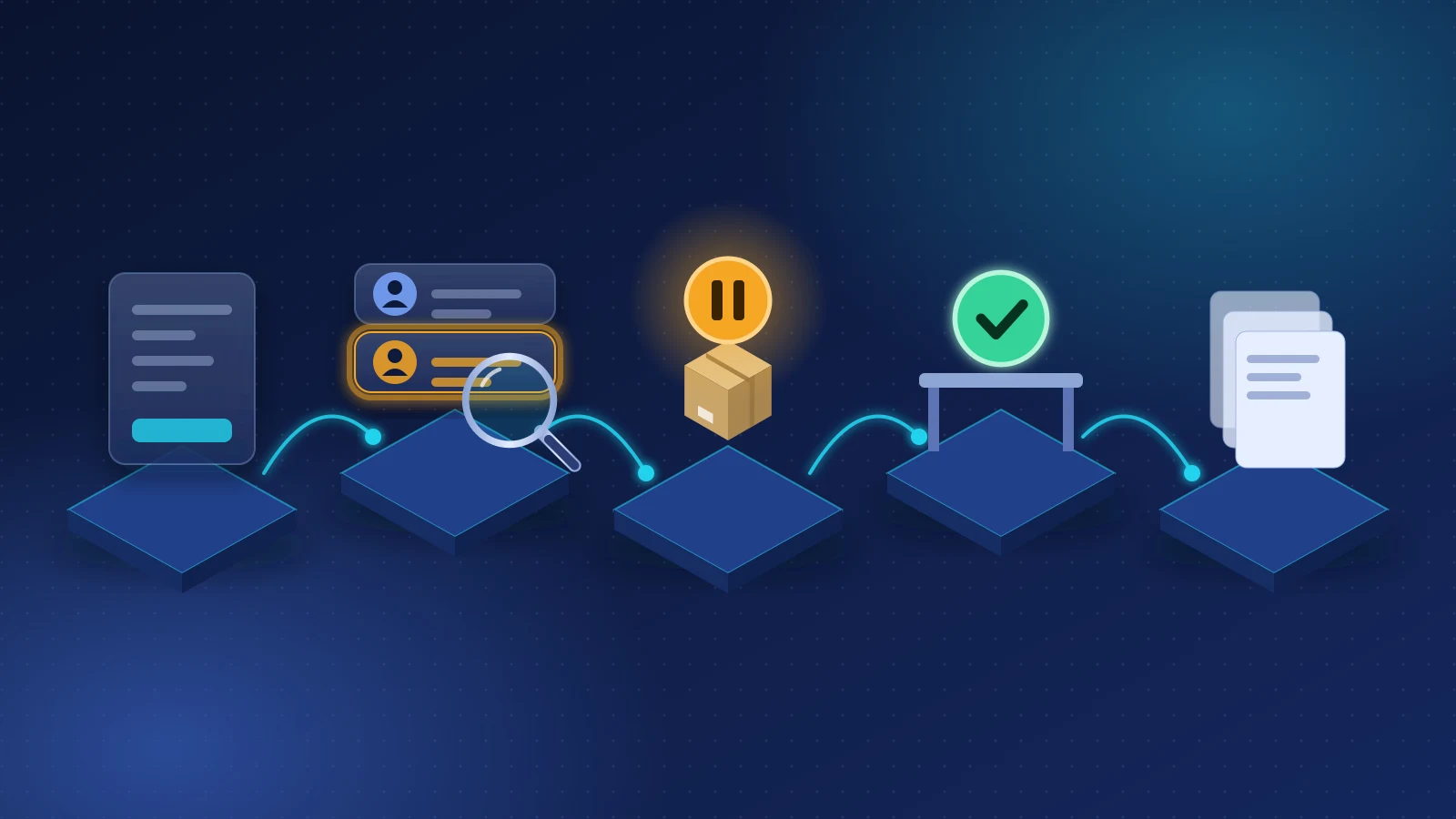
How to Screen Shopify Orders Against OFAC, EU, UK and UN Sanctions Lists (and Keep Proof)
A step-by-step sanctions screening process for Shopify: which lists to use, which names to screen, how to handle false positives, how to decide a possible match, and what records prove you screened.