8 Oct 2026
EU and UK Sanctions Rules for Online Shops: What Merchants Must Do
What EU and UK sanctions require of online shops: the EU and UK sanctions lists, the Russia goods bans, the 'no Russia' clause, strict-liability penalties, and a German summary on Sanktionslistenprüfung.
Last reviewed: 8 October 2026. EU and UK measures change frequently. This summary reflects the position after the EU's 21st Russia package (23 July 2026). It is not legal advice.
Quick answer
If your Shopify store is run from the EU, EU sanctions apply to every sale you make, wherever the customer is. If it's run from the UK, UK sanctions apply. In both regimes you must not make funds or economic resources (goods count) available to a listed person, directly or indirectly. You must also respect goods bans for specific countries, above all Russia and Belarus.
In practice that means checking each order's buyer, recipient and company against the EU Consolidated Financial Sanctions List or the UK Sanctions List, checking the destination and products against the country measures, and keeping a record. The UK enforces civil penalties on a strict liability basis. The EU now requires every member state to make serious breaches, including some committed with serious negligence, a criminal offense.
EU sanctions: who and what
EU sanctions ("restrictive measures") are adopted by the Council and apply:
- within EU territory;
- to EU nationals anywhere;
- to companies incorporated under the law of a member state;
- to any business done wholly or partly in the EU.
They take two broad forms that matter to merchants.
1. Asset freezes against listed persons. Each regime prohibits making funds or economic resources available to listed persons and entities. For Russia, that's Council Regulation (EU) No 269/2014. Selling and delivering goods to a listed person can breach this. The European Commission publishes the EU Consolidated Financial Sanctions List, which brings together the names from every EU regime. The EU also applies ownership and control rules: an entity owned more than 50% or controlled by a listed person can be caught even if it's not named.
2. Sectoral and goods measures. For Russia, Council Regulation (EU) No 833/2014 bans the sale, supply, transfer or export of many categories of goods to any person in Russia or for use in Russia. For an online shop, the most relevant are:
| Measure | What it covers | Why online shops hit it |
|---|---|---|
| Article 3h, Annex XVIII | Luxury goods above €300 per item unless the annex specifies otherwise | Fashion, leather goods, perfume, watches, spirits, sports gear, audio and video equipment |
| Article 3k, Annex XXIII | Goods that could enhance Russian industrial capabilities | Broad everyday product categories |
| Articles 2 and 2a, Annexes I and VII | Dual-use goods and advanced technology | Electronics, cameras, optics, drone parts |
| Annex XL | Common High Priority Items found in Russian weapons systems | Electronic components, navigation equipment, digital cameras |
Belarus has parallel measures under Council Regulation (EC) No 765/2006. The EU adopted its 20th Russia package on 23 April 2026 and its 21st on 23 July 2026. The 21st added more than 200 new asset-freeze listings and broadened export and import restrictions. Always check the current consolidated text on EUR-Lex.
The "no Russia" clause (Article 12g)
Since 20 March 2024, Article 12g of Regulation 833/2014 has required EU exporters to contractually prohibit re-export to Russia when they sell certain goods to buyers in third countries. The obligation covers:
- aviation goods and jet fuel (Annexes XI and XX);
- firearms and ammunition (Annex XXXV);
- Common High Priority Items (Annex XL).
It doesn't apply to buyers in the partner countries listed in Annex VIII: the United States, Japan, the United Kingdom, South Korea, Australia, Canada, New Zealand, Norway, Switzerland, Iceland and Liechtenstein. The European Commission's FAQ confirms that validly incorporated general terms and conditions can satisfy the requirement. That's how most online shops implement it.
If you sell electronics, optics or other items on the high-priority list to buyers outside the EU and the partner countries, check that your terms include the clause and that customers accept them at checkout.
How EU penalties work
Each member state sets and enforces its own penalties. Directive (EU) 2024/1226 now harmonizes the minimum: member states must criminalize violations and circumvention of EU sanctions, including certain conduct committed with serious negligence. For companies, the maximum fine must reach at least 5% of worldwide turnover or €40 million, depending on the offense. The transposition deadline was 20 May 2025.
UK sanctions: who and what
UK sanctions are made under the Sanctions and Anti-Money Laundering Act 2018. They apply to conduct in the UK and to UK nationals and UK-incorporated companies wherever they are.
- Lists. Since 28 January 2026, the UK Sanctions List published by the FCDO is the only source for UK designations. OFSI's former Consolidated List of Asset Freeze Targets was closed. If your screening source still says "OFSI Consolidated List," check that it now draws on the UK Sanctions List.
- Financial sanctions (OFSI). HM Treasury's Office of Financial Sanctions Implementation can impose civil monetary penalties on a strict liability basis for breaches since 15 June 2022. The maximum is the greater of £1 million or 50% of the value of the breach.
- Trade sanctions (OTSI). The Office of Trade Sanctions Implementation, part of the Department for Business and Trade, started on 10 October 2024. It can impose civil penalties for many trade sanctions breaches on a strict liability basis, with a maximum of the greater of £1 million or 50% of the breach value.
- Russia goods. The Russia (Sanctions) (EU Exit) Regulations 2019 contain UK-specific trade restrictions, including on luxury goods and many industrial and technology items. They are similar to the EU's but not identical.
What EU and UK merchants should do
- Screen every party on every order against the EU list (EU businesses) or the UK Sanctions List (UK businesses). Add the UN list and, if you have US exposure, OFAC.
- Check the destination. Russia, Belarus, Crimea, DNR, LNR and other sanctioned jurisdictions need a deliberate decision, not a default.
- Classify your products against the Russia annexes if you ship anywhere near Russia, including the high-priority list.
- Add the no-Russia clause to your terms if you sell Article 12g goods to non-partner countries.
- Watch for diversion through neighboring countries and forwarders; see freight forwarder red flags.
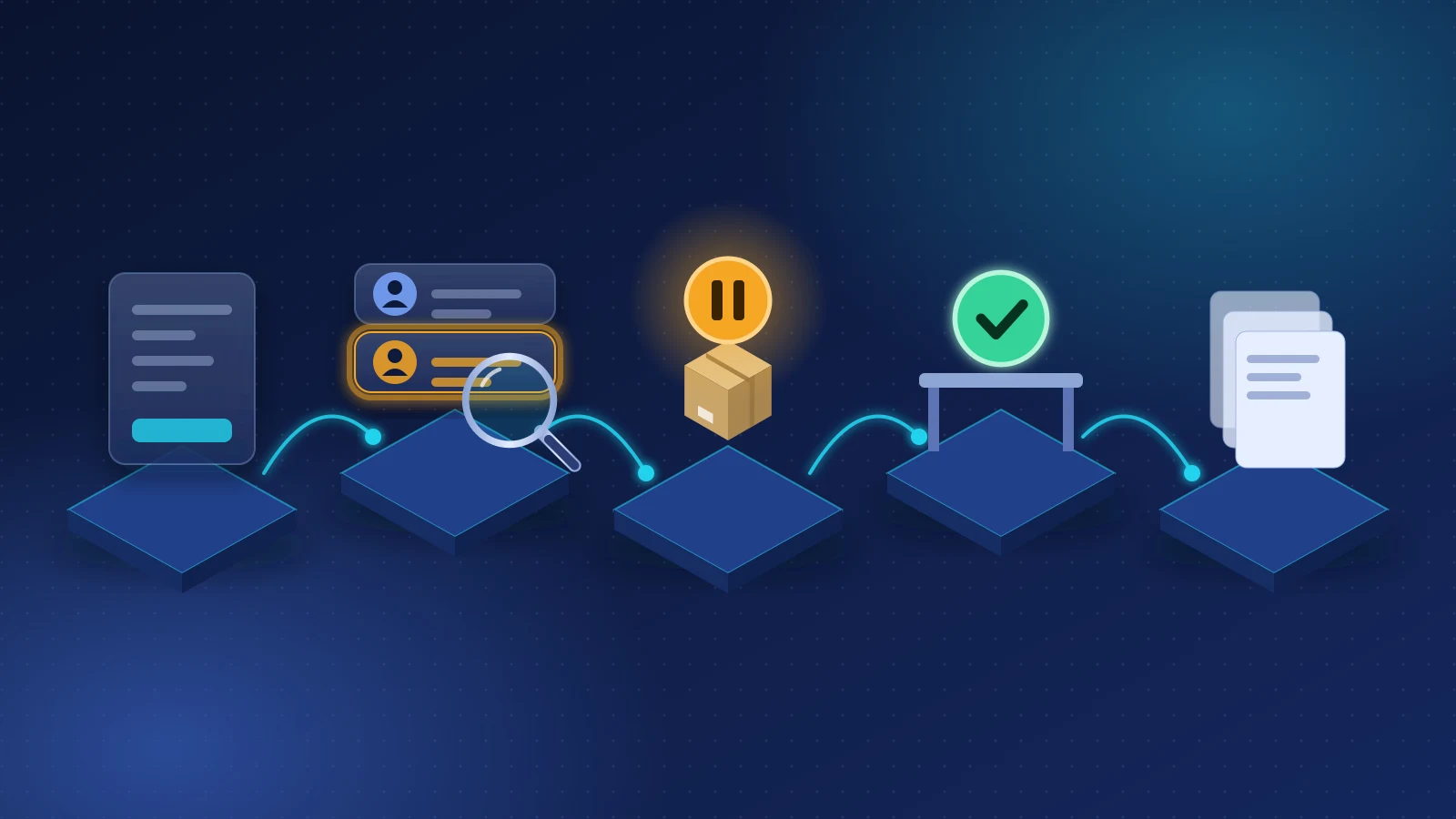
- Hold, decide, record. Pause fulfillment on a possible match, have a named person decide, and keep the evidence.
- Report when required. EU asset-freeze regulations require any person to supply information that would facilitate compliance, such as frozen funds, to the competent national authority. In the UK, mandatory reporting to OFSI applies to "relevant firms" (mainly financial and professional services businesses), though anyone can report a suspected breach.
Auf Deutsch: Sanktionslistenprüfung für Onlineshops
Gilt das für meinen Shop? Ja. EU-Sanktionen gelten für alle in der EU niedergelassenen Unternehmen, unabhängig von ihrer Größe. Es ist verboten, gelisteten Personen und Organisationen unmittelbar oder mittelbar Gelder oder wirtschaftliche Ressourcen zur Verfügung zu stellen; dazu zählt auch die Lieferung von Waren. Ein Gesetz, das eine bestimmte Software vorschreibt, gibt es nicht. Ohne Abgleich lässt sich das Bereitstellungsverbot im Alltag aber kaum einhalten.
Was gehört zur Prüfung?
- Sanktionslistenabgleich von Rechnungs- und Lieferadresse, Kundenkonto und Firmenname gegen die konsolidierte EU-Finanzsanktionsliste. Bei US- oder UK-Bezug kommen OFAC und die UK Sanctions List hinzu.
- Embargoprüfung beim Versand: Zielland bzw. Region (z. B. Krim, sogenannte Volksrepubliken Donezk und Luhansk) sowie die Russland- und Belarus-Güterverbote, etwa Luxusgüter über 300 € pro Stück nach Anhang XVIII der VO (EU) Nr. 833/2014.
- „No-Russia“-Klausel (Art. 12g VO 833/2014) in den AGB, wenn Sie Waren der Anhänge XI, XX, XXXV oder XL an Käufer außerhalb der EU und der Partnerländer verkaufen.
- Dokumentation: Wer hat wann gegen welche Listenversion geprüft, und warum wurde freigegeben oder gesperrt?
Strafen in Deutschland. Verstöße gegen EU-Sanktionen sind nach dem Außenwirtschaftsgesetz (AWG) strafbar; § 18 AWG sieht für vorsätzliche Verstöße gegen Bereitstellungs- und Ausfuhrverbote Freiheitsstrafe vor. Der Bundestag hat am 15. Januar 2026 das Gesetz zur Umsetzung der Richtlinie (EU) 2024/1226 beschlossen und die §§ 18 und 19 AWG überarbeitet. Zuständig sind u. a. die Deutsche Bundesbank (Finanzsanktionen), das BAFA (Ausfuhrgenehmigungen) und der Zoll.
Sanktionslisten-Abgleich in Shopify: Die MatchAudit-App prüft neue Bestellungen automatisch gegen die EU-Liste und weitere Listen, die Sie in den Einstellungen wählen, darunter nationale Listen aus Belgien, Frankreich, den Niederlanden, Tschechien, Estland, Lettland, Litauen und Polen. Bei einem möglichen Treffer hält sie den Versand an und dokumentiert jede Entscheidung revisionssicher. Die App-Oberfläche ist derzeit auf Englisch.
EU and UK screening with MatchAudit
MatchAudit is a Shopify app built in the EU. Install it from the Shopify App Store.
- EU and UK lists as sources: the EU Consolidated Financial Sanctions List and the UK Sanctions List, alongside the UN Security Council Consolidated List, Switzerland's SECO list, OFAC, and optional national lists for Belgium, France, the Netherlands, the Czech Republic, Estonia, Latvia, Lithuania and Poland.
- Fresh data only: lists are downloaded on a six-hourly schedule, and a list older than 72 hours isn't used. An order is clear only when it was screened against every list you selected; otherwise it's held for review.
- Country risk for billing and shipping countries, with your own stricter rules on top. Russia, Belarus or any destination you choose can be set to hold for review.
- Data protection by design. Customer names, addresses, dates of birth and Shopify tokens are encrypted before storage. The AI explanation feature, which you can switch off, never receives customer names, street addresses or order and customer IDs. Shopify's customer and shop redaction requests are honored.
- Evidence: every decision records the list versions with their checksums, the exact matched entry, the algorithm version, the reviewer and the reason. Paid plans export it as PDF or JSONL.
Check your EU or UK exposure in minutes. Install MatchAudit, choose your lists, and run the free screen of your recent orders. The Free plan includes 20 screenings a month.
Frequently asked questions
What sanctions rules apply to my EU-based Shopify store? EU asset-freeze rules for listed persons in every sale, and EU country and goods measures, notably for Russia and Belarus, wherever your customers are. National rules in your member state set the penalties.
Do I need to screen customers against the EU sanctions list? EU law prohibits making goods or funds available to listed persons. It doesn't prescribe a method, but screening each order is the practical way to comply and to show you took care.
Does the no-Russia clause apply to sales to US or UK customers? No. Buyers in the Annex VIII partner countries, including the US and UK, are excluded from the Article 12g obligation.
I'm UK-based. Which list do I check? The FCDO's UK Sanctions List. Since 28 January 2026 it has been the only source for UK designations.
Related reading
- Can I ship to Russia, Iran, Cuba or North Korea from Shopify?
- Selling electronics, drones or optics internationally?
- Freight forwarders and reshipping: red flags
Official sources
- European Commission, EU Consolidated Financial Sanctions List: data.europa.eu
- European Commission, FAQ on the "no re-export to Russia" clause: finance.ec.europa.eu
- Council Regulation (EU) No 833/2014 (consolidated): eur-lex.europa.eu
- Directive (EU) 2024/1226: eur-lex.europa.eu
- UK Government, The UK Sanctions List: gov.uk
- UK OFSI, Enforcement of financial sanctions: gov.uk
- UK OTSI, Office of Trade Sanctions Implementation: gov.uk
Related reading
Best Sanctions Screening Apps for Shopify (2026): Compared
A dated comparison of the sanctions screening apps on the Shopify App Store, covering lists, fulfillment holds, review workflow, evidence and pricing, sourced from each app's public listing.
How to Screen Shopify Orders Against OFAC, EU, UK and UN Sanctions Lists (and Keep Proof)
A step-by-step sanctions screening process for Shopify: which lists to use, which names to screen, how to handle false positives, how to decide a possible match, and what records prove you screened.